

ENTERPRISE 5.0
The BGV Beat: Q2


KEY TRENDS
The AI-Native Transformation of the Enterprise
AI Isn’t a Tech Problem, It’s an Operating Model Overhaul
Two years ago, the CEO of a global insurer believed his firm was ahead in AI. Chatbots were live, underwriting models were in production, and the board had approved significant investment. Then he asked a simple question: how much economic value had AI actually created? No one had a clear answer. Most enterprises are investing heavily in tools and pilots, but very few are redesigning how their businesses operate. AI transformation is not primarily a technology challenge. It is an operating model challenge.
AI Outcomes Are a Leadership Choice
For much of the AI era, the focus has been on creating intelligence. As access to capable models becomes widespread, the defining challenge is shifting to organizing it. Two organizations can use the same frontier models, cloud providers and vendors, yet one stays trapped in stalled pilots while the other reinvents how it creates value. The difference is rarely technology. It comes down to three leadership levers: clarity, trust and cadence. AI outcomes are not primarily a technology choice. They are a leadership choice.
DEEPER INSIGHTS
ROI: Currency of the AI Native Enterprise
The Shift from Selling Software to Selling Work
Per-seat pricing was designed for a world in which humans were the primary unit of productivity. AI agents break that assumption. An agent that replaces ten analysts creates enormous value for the customer, yet can shrink a seat-based vendor’s revenue. AI-native startups are not just changing price cards; they are redefining the unit of value itself. The right model depends on how autonomously the system works and how clearly its outcomes can be attributed. Done right, pricing is not just how you get paid. It is how you win.
The Coming GenAI Pricing Shock: Why Enterprises are Unprepared
Many enterprises are enjoying what feels like an affordable GenAI revolution: a fixed monthly fee per user and free experimentation. That illusion is about to end. As GenAI moves into core business processes, pricing will shift toward consumption tied to tokens and inference, and AI spending could rise 10-20X. We have seen this before with cloud shock. The enterprises that thrive will be those that build AI FinOps disciplines early: visibility, governance, and accountability across every agent, model, and workflow.
Events
Financing Events

GenMD is building privacy-preserving digital twins of healthcare datasets, giving health systems a safe way to support research, AI development, and external partnerships. Its platform keeps the structure and value of clinical data without exposing patient identities, helping hospitals work with pharma, biotech, and academic partners faster.


Webinars
Perspectives
Webinars
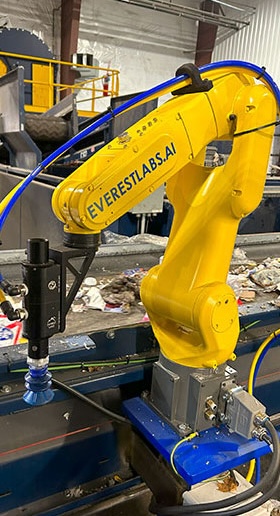
Why Universal Waste Systems Chooses EverestLabs
Recycling facilities need to produce clean, high-quality bales while handling a growing volume of plastics in tight spaces. At Universal Waste Systems’ material recovery facility in Santa Fe Springs, California, two EverestLabs robotic sorters have made a measurable difference: PET output has risen by an estimated 10–15% and contamination in other plastics has been nearly eliminated. Just as important, the team spent time learning how the facility works before deploying. Physical AI wins when it becomes part of the operation, not an add-on.
Watch here

Webinars
Why We Invested in XCaliber Health
Healthcare has a productivity problem that more money and more people alone cannot fix. For two decades, health systems have bought EHRs, billing tools, and AI copilots without ever acquiring a layer that coordinates them, so staff stitch systems together by hand. XCaliber closes that gap with an agentic operating system that runs workflows end-to-end, with human oversight on every decision that matters. Led by former athenahealth CTO Prakash Khot, it is a core expression of our Enterprise 5.0 thesis.
Watch here

Webinars
Why We Invested in OpsMill
Large enterprises run thousands of network devices, yet no one has a reliable view of the whole network. Critical knowledge is scattered across tools, scripts, and the heads of a few engineers. OpsMill’s Infrahub provides the missing foundation: a versioned, auditable source of truth for infrastructure. In simple terms, it is Git for the network. As agentic operations and the data center race raise the cost of poor data, we believe OpsMill is building a category-defining infrastructure layer.
Watch here

Webinars
Percepto and the Rise of Dual Use
As wars, energy pressures, and the rise of AI strain global infrastructure, a new class of companies is emerging at the intersection of commercial and defense systems. Percepto, an Israeli developer of autonomous drone-in-a-box systems, is an early example. Its platform is already deployed across refineries, power facilities, and mining operations, with regulatory approvals that remain rare in the sector. For BGV, the real test of a dual-use company is not how fast it grows, but whether it becomes embedded infrastructure.
Watch here

Contact
Let's Talk

Whether you are a founder building the future of enterprise AI, an investor seeking long-horizon alpha, or a corporate leader looking for the frontier, we want to hear from you.